
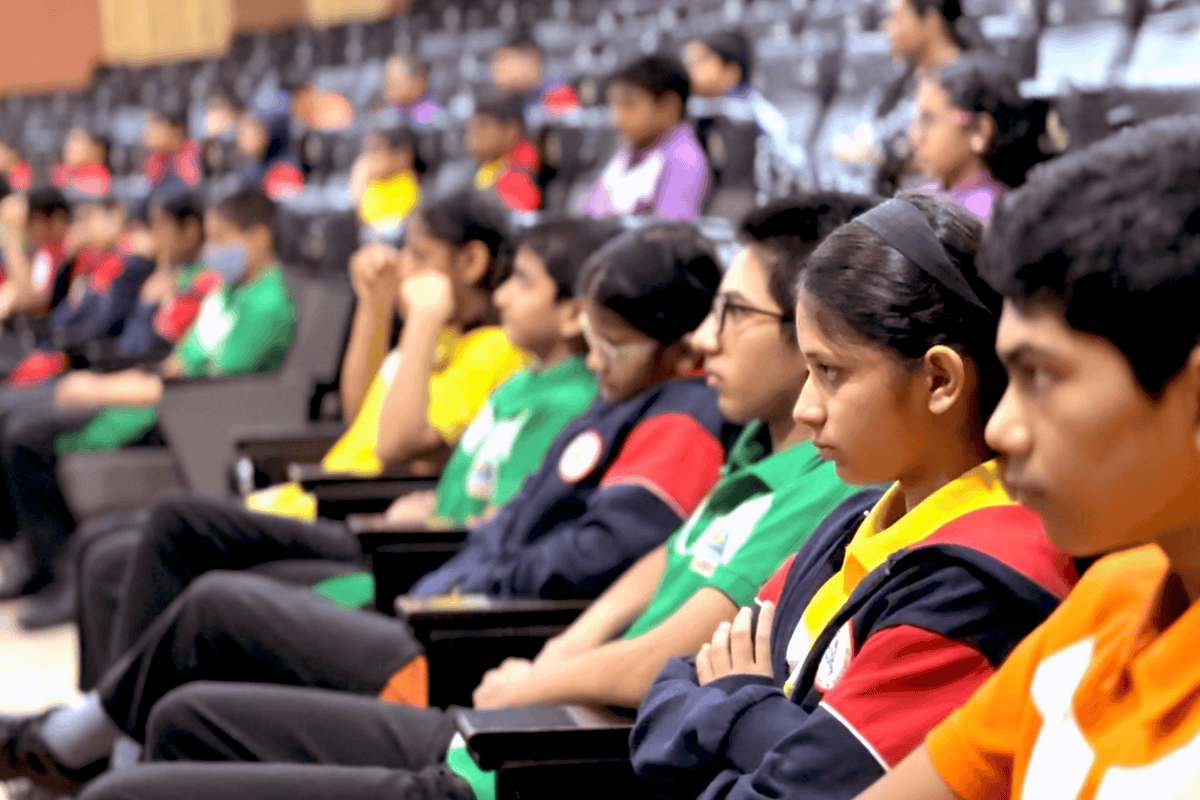
For generations, humanity's relationship with nature was not something that needed to be taught. It was lived. Children learned the rhythm of seasons by watching trees flower and shed. They understood rivers not through diagrams but through daily interaction. They recognised the value of biodiversity because they experienced it firsthand. Nature was not a chapter in a textbook; it was an integral part of life itself.
Today, that relationship is changing. As societies urbanise and technology reshapes the way young people interact with the world, a growing number of children are experiencing nature at a distance. They learn about ecosystems, climate change and conservation in classrooms, yet many have limited opportunities to develop a personal connection with the natural world those concepts describe.
This presents one of the defining educational challenges of our time.
The question before us is no longer whether young people understand environmental issues. Increasingly, they do. The more important question is whether they feel connected enough to the natural world to care about its future.
The answer to that question may shape the future of our planet.
An Education System at a Crossroads
India operates one of the largest school education systems in the world. According to the Unified District Information System for Education Plus (UDISE+) 2024-25 report released by the Ministry of Education, the country’s schools serve approximately 24.69 crore students across 14.71 lakh institutions, supported by a teacher workforce that has crossed the one crore mark for the first time in any recorded academic year. These are, by any measure, significant achievements and reflect decades of sustained investment in access and infrastructure.
Yet as the system scales in breadth, a quieter challenge has grown in urgency. The quality and depth of environmental education being imparted to those millions of students. As per International Journal of Research published in 2025 evaluated the current state of environmental education in Indian schools and found that courses and curricula remain primarily theoretical, promoting what the authors describe as a “utilitarian understanding of nature” rather than genuine ecological engagement. Environmental studies continues to be taught as a subject to be completed rather than a relationship to be developed.
The National Education Policy 2020 has acknowledged this gap, calling for a shift from content-based learning to skill-based, experiential pedagogy across all subjects including environmental studies. The policy envisions educators integrating hands-on approaches that enable students to engage actively with real-world environmental challenges. However, the translation of that vision into consistent classroom practice across a system of this scale remains an ongoing and considerable challenge.
The consequences of this gap are increasingly visible. A nationwide survey published in late 2024 found that 94 per cent of Indian youth between the ages of 14 and 25 report being directly impacted by climate related disruptions to their daily lives, education, and mental health. A further 88 per cent said they had personally witnessed environmental changes in their surrounding regions over the preceding five to seven years. Alarmingly, nearly half reported heightened stress and anxiety as a direct result. UNICEF estimates that climate shocks affected the schooling of at least 242 million children globally in 2024 alone, with India among the most significantly affected nations.
(https://www.downtoearth.org.in/climate-change/94-indian-youth-feels-impacted-by-climate-change-survey
https://www.unicef.org/reports/learning-interrupted-global-snapshot-2024 )
What these figures collectively point to is a generation that is acutely aware of the environmental crisis yet has not been equipped, through formal education, with the emotional vocabulary or the sense of agency required to respond meaningfully to it. The challenge, then, is not one of awareness but of approach.
The Youth COSMO: Where Storytelling Meets Conservation
Founded on the conviction that young people are not the problem but the solution, The Youth COSMO has long been working at the intersection of youth engagement and environmental advocacy. The organisation recognised early that lectures and pamphlets could inform, but only genuine experience and narrative could transform.
It was this conviction that led to the conception of Stories of Nature, a film led environmental education initiative designed specifically for school students. Developed in partnership with ALT EFF India, a platform dedicated to using cinema as a force for ecological awareness, and the Ecological Society, a Pune based institution with decades of expertise in grassroots conservation, the programme represents a carefully considered departure from conventional environmental pedagogy.
The premise is straightforward but powerful: instead of asking children to read about nature, invite them to see it, feel it, and discuss it. Short films chosen for their evocative power and ability to compress complex ecological realities into emotionally resonant moments form the centrepiece of each session. These are followed by interactive discussions, reflective exercises, and guided activities designed to translate emotional engagement into lasting, planet-positive habits.
The programme does not seek to replace the classroom curriculum. It seeks to give it a heartbeat.

SHM Group Steps In: Business as a Force for Ecological Good
Every meaningful initiative needs a partner willing to believe in it before it has proven itself at scale. For Stories of Nature, that partner is SHM Group.
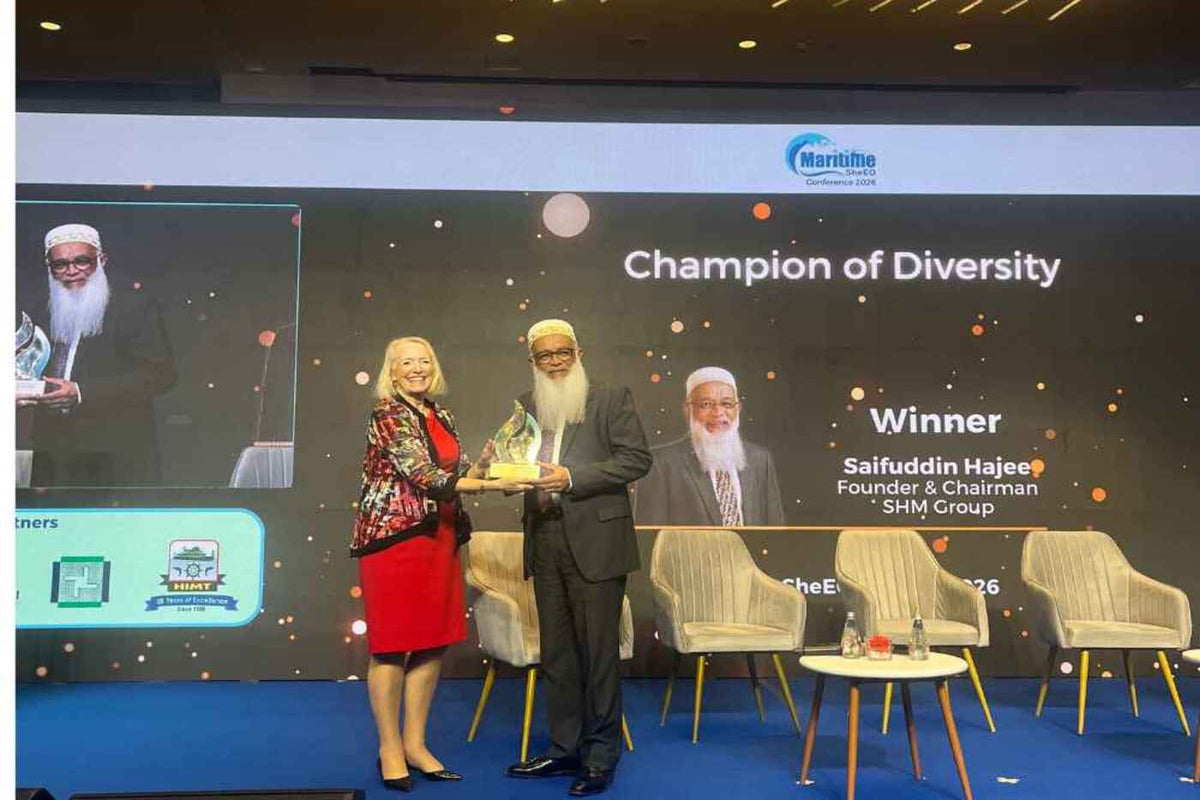
SHM Group is a Mumbai headquartered enterprise with a multi generational legacy in India’s maritime sector, spanning shipbuilding, marine safety, offshore engineering, and ship management. It is a company whose work is, by its very nature, intimately tied to the health of the ocean: to the quality of the water its vessels navigate, the ecosystems its offshore installations operate within, and the future of the maritime environment that sustains the industry it has helped build.
It is perhaps that connection that makes SHM Group’s decision to power Stories of Nature feel less like a corporate social responsibility exercise and more like a natural extension of the company’s values. The company’s support enables The Youth COSMO to bring the programme to schools across the country, providing the institutional backing needed to move from pilot to scale.
“At SHM Group, we have always understood that our work does not happen in isolation from the natural world. It depends on it. The oceans, the coastlines, the ecosystems that sustain marine life are not abstractions to us; they are the environment in which we operate every day. Stories of Nature resonates with us because it addresses something fundamental: the need for the next generation to develop a genuine, felt relationship with the planet. Environmental education that moves children, that makes them curious, that makes them care, is one of the most important investments a society can make. We are proud to play a part in it.”
Says Mr. Mohammed Hajee, CEO Maritime Safety & Security, SHM Group
Stories of Nature: The Programme in Practice
The programme’s design reflects a sophisticated understanding of how young minds engage with the world. Rather than prescribing a fixed message, Stories of Nature creates the conditions for discovery. A carefully curated short film is screened, perhaps depicting a forest ecosystem responding to seasonal change, or a marine environment revealing its quiet complexity, and students are then guided through facilitated discussion and reflective activities that help them process what they have seen and felt.
The interaction is designed to be age-appropriate and inclusive, drawing on the lived experiences of students regardless of their geographic or socioeconomic background. A child growing up in a Mumbai high rise and a student in a semi-rural school may arrive at the same film with different frames of reference, but both can leave having been moved by something larger than the curriculum. This inclusivity is not incidental; it is central to the programme’s theory of change.
What the programme ultimately seeks to develop is ecological empathy: the capacity to see oneself as part of a living system, rather than apart from it. This, educators and researchers broadly agree, is the foundation on which all meaningful environmental action is built. As the United Nations Sustainable Development Goals Report 2023 noted, youth have consistently emphasised the need for interdisciplinary, action-oriented education that is both globally relevant and tailored to local realities. Stories of Nature is designed to meet precisely that need.
“Stories of Nature was born out of a simple but urgent recognition: that we cannot ask young people to protect a world they have never been invited to truly see. Cinema, when it is done right, has the power to collapse the distance between a child sitting in a classroom and the living, breathing complexity of the natural world. We are deeply grateful to SHM Group for understanding that vision and for choosing to stand behind it. Their support has not only made the programme possible at scale; it has shown us what meaningful partnership between the private sector and civil society can look like when both sides are genuinely invested in the outcome.”
Spokesperson, The Youth COSMO
Why This Moment Matters
India is, by any measure, at a critical environmental juncture. The country is among the world’s most climate-vulnerable nations, with a population whose relationship to natural systems, from the Himalayan watersheds that feed its rivers to the coastal ecosystems that protect its shores, is at once deeply intimate and increasingly threatened. The World Bank has projected that a ten-year-old in 2024 will face, over their lifetime, twice as many wildfires and tropical storms, three times as many river floods, four times the number of crop failures, and five times as many droughts as their counterpart born in 1970, assuming a three degree rise in global temperatures.
In this context, the environmental literacy of the next generation is not a peripheral concern. It is a civilisational one. Research in developmental psychology consistently demonstrates that attitudes toward the environment are largely formed in childhood, particularly in the years between eight and fourteen. Programmes that reach children during this window have an outsized and disproportionate impact on the environmental choices those children will make as adults, as parents, and as citizens.
The Ministry of Education’s own data reflects a growing recognition of this imperative. Under Mission LiFE, the government established 1.46 lakh new Eco Clubs in schools during 2024-25, promoting environmental awareness through practical activities. Yet institutional mechanisms, however well-intentioned, can only go so far. The deeper work of building an ecological consciousness in the next generation requires something that no policy directive can mandate: a felt sense of wonder, of connection, and of responsibility toward the living world.
(https://www.pib.gov.in/PressReleasePage.aspx?PRID=2091737®=48&lang=2 )
Stories of Nature is, in this sense, not simply an education programme. It is a long-term investment in the ecological consciousness of a country, one made possible by the belief, shared by The Youth COSMO and SHM Group alike, that the most durable solutions to environmental problems begin not with policy or technology, but with a child who has learned to pay attention.
In that sense, the partnership between SHM Group and The Youth COSMO is a quiet but significant statement. It suggests that the private sector need not wait for regulatory pressure or reputational incentive to act on the environment. That sometimes, the most important thing a company can do is simply help a child watch a film and ask what they felt.


Leave a comment
This site is protected by hCaptcha and the hCaptcha Privacy Policy and Terms of Service apply.