
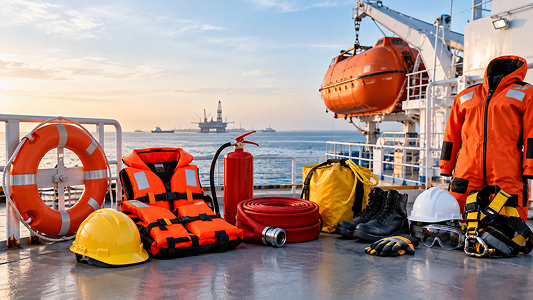
Choosing the right marine safety equipment is an important part of vessel operations. Shipowners, ship managers and offshore operators need equipment that meets their requirements, comes with the necessary documentation and can be maintained throughout its service life.
When sourcing ship safety equipment, businesses generally work with manufacturers or suppliers. While some companies perform both roles, there are differences in how they produce, source and deliver equipment.
Understanding these differences can help buyers make better procurement decisions, whether they need life-saving appliances, fire safety equipment or personal protective equipment (PPE).
What Does a Marine Safety Equipment Manufacturer Do?
A manufacturer produces equipment for use onboard vessels, offshore installations and other maritime facilities. Depending on its operations, the company may handle product design, material selection, assembly, testing and quality checks.
Marine safety equipment manufacturers may produce lifejackets, lifeboats, life rafts, immersion suits, firefighting equipment and other safety products.
When buying directly from a manufacturer, customers can obtain product-specific information, technical specifications and details about the equipment's intended use. For specialised products, this can be particularly useful when evaluating design requirements or compatibility with existing systems.
Manufacturers must also ensure that their products meet the standards and approval requirements applicable to their intended use. Buyers should verify the relevant certification rather than assume that every product from a manufacturer is approved for every type of vessel.
What Does a Marine Safety Equipment Supplier Do?
A marine safety equipment supplier sources and provides products to customers such as shipping companies, shipyards, offshore operators and vessel managers.
Unlike a manufacturer that focuses on producing its own equipment, a supplier may work with several brands. This allows customers to source different categories of marine safety products through a single procurement channel.
Depending on the supplier, services may include:
-
Sourcing equipment based on vessel requirements.
-
Coordinating product availability and delivery.
-
Providing product specifications and relevant documentation.
-
Arranging spare parts, inspection or servicing support.
-
Coordinating with manufacturers when technical assistance is required.
For businesses purchasing multiple types of safety equipment, working with a supplier can simplify procurement. However, buyers should check the supplier's technical knowledge, product traceability and ability to provide the required documentation.
Supplier vs Manufacturer: What Is the Difference?
The main difference lies in how each business operates and supports the customer.
|
Area |
Manufacturer |
Supplier |
|
Main role |
Produces or develops equipment |
Sources and provides equipment |
|
Product range |
Usually focuses on its own products |
May offer products from multiple brands |
|
Technical information |
Provides product-specific details |
Shares information provided by manufacturers and its own technical team |
|
Procurement |
Suitable for direct purchases of its products |
Can consolidate purchases across product categories |
|
Delivery |
Depends on production schedules and stock |
May source products from different manufacturers |
|
Maintenance support |
May service its own products |
May provide or coordinate servicing through qualified providers |
These roles are not always separate. Some companies manufacture their own equipment and also supply products from other manufacturers. Others provide inspection, maintenance and after-sales support alongside their core business.
For buyers, the important consideration is not simply whether a company is a supplier or manufacturer, but whether it can meet the equipment, documentation and service requirements of the vessel.
Types of Marine Safety Equipment to Consider
The equipment required depends on the vessel, its operating environment and the risks associated with its operations.
1. Life-Saving Appliances
Life-saving appliances help protect people during emergencies at sea. These include lifeboats, life rafts, lifejackets, lifebuoys and immersion suits.
For vessels subject to SOLAS requirements, equipment selection must follow the applicable regulations and approval requirements. Buyers should also consider the number of people onboard, the vessel's operating area and the equipment's intended application.
2. Fire Safety Equipment
Fire safety equipment is essential for responding to onboard fires. Depending on the vessel and its installed systems, this may include fire extinguishers, fire hoses, breathing apparatus, fire detection systems and firefighting equipment.
When purchasing these products, operators should check compatibility with onboard systems, relevant approvals and servicing requirements.
3. PPE – Personal Protective Equipment
PPE, or personal protective equipment, helps protect workers from workplace hazards. Common examples in maritime and offshore operations include safety helmets, gloves, protective footwear, coveralls, eye protection and fall-protection equipment.
The type of safety gear required depends on the job being performed. Equipment used during welding, machinery maintenance, firefighting and work at height may have different protection requirements.
Businesses should select PPE based on workplace risk assessments, applicable standards and the manufacturer's instructions.
4. Water Safety and Lifeguard Equipment
Water safety equipment is used in activities involving rescue, flotation and protection around water. Depending on the application, it may include rescue tubes, throw bags, rescue rings, flotation devices and rescue lines.
Lifeguard safety equipment used at beaches or swimming pools may differ from equipment required onboard commercial vessels. Buyers should confirm that the selected products are suitable for the intended environment.
How to Choose the Right Supplier or Manufacturer
Before placing an order, buyers should evaluate a few practical factors.
Product approvals and documentation: Check the certificates, technical specifications and approvals required for the intended application. For regulated vessels, confirm the relevant SOLAS, flag-state or other applicable requirements.
Product availability: Confirm stock, production lead times and delivery schedules, particularly when equipment is required for vessel mobilisation or replacement.
Technical support: Make sure the provider can answer questions about product specifications, installation, use and compatibility.
Inspection and servicing: Ask whether maintenance is provided directly or arranged through an appropriately qualified service provider. Confirm the applicable servicing intervals and availability of replacement parts.
Cost and long-term requirements: Compare the purchase price alongside servicing, consumables, spare parts, warranty terms and expected service life.
The lowest initial price may not always be the most suitable option. Equipment must meet the required specifications and remain fit for use throughout its service life.
Why the Right Choice Matters
Selecting a marine safety equipment supplier or manufacturer should begin with the vessel's actual requirements.
Direct engagement with a manufacturer may be useful when purchasing specialised equipment or when detailed product information is needed. A supplier may be a practical choice when several product categories must be sourced together or deliveries need to be coordinated across different locations.
In either case, buyers should verify product suitability, certification, documentation and servicing arrangements before making a decision.
For shipowners and operators, these checks help ensure that procurement decisions support operational needs and onboard safety.
Frequently Asked Questions
What is the difference between a marine safety equipment supplier and a manufacturer?
A manufacturer produces equipment, while a supplier sources and sells equipment to customers. Some companies perform both roles and may also provide technical support or servicing.
Is it better to buy ship safety equipment directly from a manufacturer?
It depends on the requirement. Buying directly may be useful for specialised products and manufacturer-specific technical support. Suppliers can be helpful when sourcing multiple products or brands through one channel.
What should I check before purchasing life-saving equipment?
Check the product's intended use, applicable approvals, technical specifications, certification documents, traceability and servicing requirements. Requirements vary according to the vessel and equipment type.
What is PPE in the maritime industry?
PPE stands for personal protective equipment. It includes items such as helmets, gloves, safety footwear, protective clothing and eye protection used to reduce workplace risks.
Can a marine safety equipment supplier arrange servicing?
Some suppliers provide servicing directly, while others coordinate it through manufacturers or qualified service providers. Confirm the service scope, applicable approvals and documentation before proceeding.
Conclusion
Manufacturers and suppliers both contribute to the availability of marine safety equipment. Manufacturers focus on producing equipment, while suppliers help customers source products and coordinate procurement.
For shipowners, ship managers and offshore operators, the right choice depends on the products required, technical support available, delivery schedules and applicable compliance requirements.
Checking these factors before purchasing helps businesses source suitable equipment and plan for its maintenance over time.

Leave a comment
This site is protected by hCaptcha and the hCaptcha Privacy Policy and Terms of Service apply.