
Introduction
Emergencies at sea can leave crew members exposed to cold water, rough weather and the risk of drowning. Having the right life-saving appliances onboard is essential for protecting lives and supporting an effective emergency response.
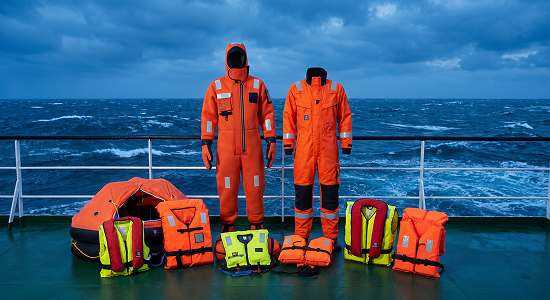
Immersion suits and lifejackets are two important types of marine safety equipment, but they serve different purposes. Immersion suits help reduce body heat loss during water exposure, while lifejackets provide buoyancy to help keep a person afloat.
For shipowners, vessel operators and maritime professionals, understanding the types of equipment available, their intended use and their maintenance requirements is an important part of onboard safety.
What Are Immersion Suits Used for at Sea?
Immersion suits are protective garments designed to reduce heat loss when a person enters the water. They are particularly important in cold-water conditions, where prolonged exposure can lead to hypothermia.
These suits are designed to cover most of the body and typically include features such as waterproof material, sealed closures and integrated footwear or other protective components, depending on the model.
The level of protection varies according to the suit's design, insulation and approved specifications. Selection should therefore consider the vessel's operating environment and applicable maritime requirements.
Types of Immersion Suits
1. Insulated Immersion Suits
Insulated immersion suits are designed to provide thermal protection by slowing the loss of body heat. They are particularly useful where crew members may be exposed to cold water for an extended period.
Their performance depends on the insulation, construction and conditions for which the suit has been approved.
2. Non-Insulated Immersion Suits
Non-insulated immersion suits provide a waterproof barrier but offer less thermal protection than insulated designs. Their suitability depends on the expected water temperature, exposure conditions and applicable requirements.
Additional thermal protection may be necessary in certain situations.
3. Immersion Suits with Additional Buoyancy Features
Some immersion suits incorporate buoyancy features to help support the wearer in the water. The level of flotation and the need for a separate lifejacket depend on the particular design and applicable approval requirements.
Buyers should check the manufacturer's instructions and the vessel's safety requirements before selecting this type of equipment.
What Are the Different Types of Lifejackets Used at Sea?
Lifejackets are designed to provide buoyancy and help keep the wearer's airway above water. They are used on commercial vessels, offshore installations and other marine operations where people may need to abandon a vessel or respond to a man-overboard emergency.
The appropriate lifejacket depends on the vessel, the intended user and the applicable safety requirements.
1. Inherently Buoyant Lifejackets
These lifejackets use buoyant materials, usually foam, to provide flotation without requiring inflation. They do not depend on a gas cylinder or inflation mechanism to provide their inherent buoyancy.
They may be suitable for applications where simple operation and immediate flotation are important. Correct sizing, fit and approval remain essential.
2. Inflatable Lifejackets
Inflatable lifejackets use an inflation system to provide buoyancy. Depending on the design, they may inflate automatically when immersed in water or manually when activated by the wearer.
Their compact design can make them suitable for certain working environments where freedom of movement is important. However, the inflation mechanism, gas cylinder, valves and fabric require inspection according to the manufacturer's instructions.
3. Lifejackets for Different Maritime Operations
Lifejackets are available in different designs to suit particular operational requirements. Factors such as visibility, fit, buoyancy, ease of donning and compatibility with other personal protective equipment should be considered during selection.
Crew members should also receive instructions on how to wear and adjust their lifejackets correctly. Equipment that is unsuitable or incorrectly fitted may not provide the intended protection during an emergency.
Immersion Suits vs Lifejackets: Key Differences
Although both are essential life-saving appliances, immersion suits and lifejackets have different primary functions.
|
Feature |
Immersion Suit |
Lifejacket |
|
Primary purpose |
Helps reduce heat loss during water exposure |
Provides buoyancy to support flotation |
|
Main protection |
Thermal protection and water barrier |
Flotation and support in the water |
|
Typical application |
Situations involving exposure to cold water |
Man-overboard incidents and vessel abandonment |
|
Maintenance focus |
Material, seams, closures and seals |
Buoyancy components, straps and inflation systems, where fitted |
The two types of equipment are not automatically interchangeable. Depending on the vessel and operating conditions, both may be required. Operators should follow applicable SOLAS requirements, flag-state rules and the vessel's safety procedures.
Immersion Suit Maintenance and Lifejacket Servicing
Marine safety equipment must be kept in a condition suitable for emergency use. Regular inspections help identify damage, deterioration or faulty components before the equipment is needed.
Immersion Suit Maintenance
Immersion suit maintenance should follow the manufacturer's instructions and applicable regulations. Checks may include:
-
Inspecting the material for cuts, tears or deterioration.
-
Checking seams, closures and seals for damage.
-
Examining gloves, footwear and other fitted components.
-
Ensuring the suit is stored correctly and remains accessible.
-
Maintaining inspection records and arranging servicing when required.
Any damaged suit should be assessed before it is returned to service.
Lifejacket Servicing
Lifejacket servicing depends on whether the equipment is inherently buoyant or inflatable. Inspections may include checking the outer fabric, straps, buckles, buoyancy material and, where fitted, the inflation mechanism and gas cylinder.
For inflatable lifejackets, particular attention should be given to the condition of the inflation system and the replacement of components when required. Servicing intervals should follow the applicable requirements and manufacturer guidance.
Shipowners should use appropriately qualified service providers where required and maintain records of inspections and servicing.
How to Choose the Right Marine Safety Equipment
When sourcing immersion suits and lifejackets, shipowners and operators should consider more than the purchase price.
Operating conditions: Water temperature, weather and the vessel's operating area influence the type of protection required.
Regulatory requirements: Check the applicable SOLAS provisions, flag-state requirements and product approvals for the vessel and equipment.
Fit and usability: Equipment must be suitable for the intended wearer and practical to don during an emergency.
Certification and documentation: Verify relevant approval certificates, technical specifications and manufacturer instructions.
Maintenance support: Check the availability of inspection, servicing and replacement components throughout the equipment's service life.
Working with reliable immersion suits manufacturers, lifejacket manufacturers and marine safety equipment suppliers can help buyers identify products suited to their operational requirements.
Frequently Asked Questions
1. What is the main purpose of an immersion suit?
An immersion suit helps reduce body heat loss when a person is exposed to water. It is especially important in cold-water conditions where prolonged exposure may lead to hypothermia.
2. What is the difference between an immersion suit and a lifejacket?
An immersion suit primarily provides thermal protection, while a lifejacket provides buoyancy. Depending on the vessel's requirements, both may be necessary for adequate protection.
3. What are the main types of lifejackets used at sea?
The main categories are inherently buoyant lifejackets and inflatable lifejackets. The appropriate type depends on the intended application and applicable approval requirements.
4. How often should immersion suits and lifejackets be inspected?
Inspection and servicing requirements depend on the equipment type, manufacturer instructions and applicable regulations. Vessel operators should follow the prescribed schedules and maintain appropriate records.
5. Are all immersion suits and lifejackets SOLAS-approved?
No. Approval depends on the product, its intended use and the applicable requirements. Buyers should verify the relevant documentation before purchasing equipment for regulated vessels.
Conclusion
Immersion suits and lifejackets serve different but complementary roles in maritime safety. While immersion suits help reduce heat loss, lifejackets provide the buoyancy needed to support a person in the water.
Selecting suitable equipment, verifying the required approvals and maintaining it correctly are essential responsibilities for shipowners and vessel operators. Regular inspection and proper crew training also help ensure that life-saving appliances are ready when an emergency occurs.

Leave a comment
This site is protected by hCaptcha and the hCaptcha Privacy Policy and Terms of Service apply.