
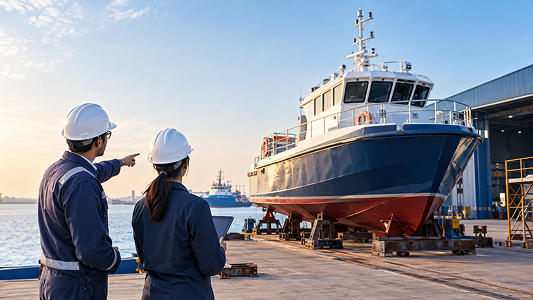
Choosing a boat manufacturer is an important decision for businesses operating in the commercial, defence and maritime sectors. A vessel must meet its intended operational requirements, perform reliably in its working environment and be supported throughout its service life.
For buyers evaluating boat manufacturers in India, the decision involves more than comparing prices or delivery timelines. Factors such as design capability, build quality, testing, regulatory compliance and after-sales support all influence a vessel's long-term performance.
Whether the requirement is for a crew boat, a commercial vessel or a specialised workboat, understanding these factors can help buyers choose a manufacturing partner suited to their needs.
1. Experience in Boat Manufacturing
A manufacturer's experience provides useful insight into its ability to manage vessel design, construction and delivery. However, experience should be assessed alongside the types of vessels built and their suitability for the buyer's requirements.
A boat manufacturing company working on commercial or specialised vessels should be able to explain its manufacturing capabilities, previous projects and experience with similar applications.
Buyers should consider:
- Types and sizes of vessels manufactured.
- Experience with similar operational requirements.
- Previous project deliveries and customer references.
- Capability to handle specialised vessel specifications.
For example, the requirements of a passenger boat differ from those of a crew boat used to transport personnel between shore facilities and offshore installations. Experience with the relevant vessel category is therefore important.
2. Design and Engineering Capabilities
A reliable boat manufacturer must understand how a vessel will be used before finalising its design. Passenger capacity, operating speed, range, payload, sea conditions and onboard equipment all influence the vessel's configuration.
Engineering decisions also affect stability, manoeuvrability, fuel consumption and maintenance requirements.
Before selecting a manufacturer, buyers should understand whether the company can manage the required design and engineering work, including:
- Hull design and construction specifications.
- Propulsion and machinery integration.
- Stability and performance assessments.
- Electrical, navigation and safety systems.
- Customisation based on operational needs.
These capabilities are particularly relevant when procuring specialised commercial boats or vessels intended for demanding operating environments.
3. Build Quality and Material Selection
The materials and construction methods used in a vessel affect its durability, weight, maintenance needs and performance.
Depending on the application, boats may be constructed using aluminium, steel, fibre-reinforced plastic or other suitable materials. Each has different characteristics, and the right choice depends on the vessel's design and intended use.
For example, aluminium may be selected for certain lightweight workboats, while steel may be appropriate for vessels requiring particular structural characteristics. Composite materials can also be suitable for specific applications.
Buyers should ask about material specifications, fabrication processes, welding or bonding procedures where applicable, and quality checks conducted during construction.
A manufacturer's quality assurance process should extend beyond the finished vessel to include materials, components and assembly.
4. Testing and Quality Assurance
A vessel should be inspected and tested to verify that it meets its specified requirements before delivery.
The testing process depends on the vessel type, design and applicable standards. It may include checks of propulsion systems, steering, electrical equipment, navigation systems and onboard safety equipment.
Sea trials, where required, help assess how the vessel performs under specified operating conditions. The results should be documented and evaluated against the agreed specifications.
When assessing boat manufacturers, buyers should ask about their inspection procedures, testing facilities, quality records and arrangements for addressing issues identified during trials.
5. Regulatory Compliance and Certification
Vessels intended for commercial, passenger or specialised operations may be subject to regulatory requirements, surveys and certification.
The requirements depend on factors such as the vessel's size, purpose, operating area and flag or registration arrangements.
Before placing an order, buyers should establish which standards, statutory approvals and classification requirements apply to the project. They should also confirm who is responsible for arranging inspections, submitting documentation and obtaining the required approvals.
Certification should be verified against the specific vessel and its intended application rather than assumed from a manufacturer's general credentials.
6. Ability to Build Different Types of Commercial Boats
Not every manufacturer specialises in the same vessel categories. Buyers should evaluate whether a company's capabilities match the intended application.
Crew Boats
A crew boat is designed to transport personnel between shore facilities, vessels and offshore installations, depending on its configuration and operating approvals.
Important considerations include passenger capacity, seating arrangements, speed, range, boarding access, safety systems and operating conditions.
Commercial Workboats
Commercial boats may be used for activities such as harbour operations, maintenance, transport and other marine support tasks.
The vessel's working deck, payload, propulsion system and equipment arrangements should be assessed against the actual job requirements.
Specialised and Custom-Built Vessels
Some operations require vessels designed around specific equipment, performance targets or environmental conditions. In these cases, engineering flexibility and the ability to work with clearly defined specifications become particularly important.
When comparing boat manufacturing companies, buyers should check whether the manufacturer has relevant experience and the facilities needed to deliver the required vessel.
7. Delivery Schedule and Project Management
Delays in vessel delivery can affect mobilisation plans, staffing, contracts and operating schedules.
A reliable manufacturer should provide a realistic project timeline and communicate progress throughout construction. The schedule should account for design approval, procurement, fabrication, equipment installation, testing and final inspection.
Buyers should also clarify how design changes, component delays and issues identified during testing will be managed.
Regular progress updates and clearly defined project milestones make it easier to monitor delivery and address problems before they affect the overall schedule.
8. After-Sales Support and Maintenance
A vessel's requirements do not end at delivery. Regular maintenance, access to spare parts and technical support are important for keeping it operational.
Before choosing a manufacturer, buyers should ask about warranty coverage, documentation, spare-parts availability, troubleshooting support and maintenance recommendations.
For commercial operators, the ability to obtain timely technical assistance can be particularly important when a vessel supports scheduled operations or offshore activities.
A manufacturer that provides clear documentation and an established support process can help customers plan maintenance more effectively.
9. Cost, Value and Long-Term Operating Requirements
Price is an important consideration, but the lowest quotation may not represent the best long-term value.
Buyers should compare quotations against the same technical specifications and consider what each proposal includes. Differences in materials, installed equipment, testing, certification, warranties and delivery terms can affect the overall cost.
It is also useful to consider operating expenses, fuel consumption, routine maintenance and the availability of replacement parts.
A detailed comparison helps buyers understand the total cost of ownership rather than making a decision based on the initial purchase price alone.
How to Choose the Right Boat Manufacturer in India
When evaluating boat manufacturing in India, start by defining the vessel's intended use, operating environment, technical specifications and delivery requirements.
Shortlist manufacturers with relevant experience and ask them to provide information about their engineering capabilities, construction processes, testing procedures and previous projects.
Before finalising a contract, review the technical proposal, delivery milestones, applicable approvals, warranty terms and after-sales arrangements.
The right manufacturer should be able to explain how the proposed vessel meets your requirements and provide clear documentation to support that proposal.
Frequently Asked Questions
1. How do I choose a reliable boat manufacturer?
Evaluate the manufacturer's experience with similar vessels, engineering capabilities, build quality, testing procedures, applicable certifications, delivery record and after-sales support.
2. What should I check before buying a commercial boat?
Review the vessel's intended use, passenger or payload capacity, speed, range, construction materials, safety equipment, applicable approvals, maintenance requirements and total cost.
3. What is important when choosing a crew boat manufacturer?
Consider passenger capacity, operating range, speed, boarding arrangements, propulsion systems, safety features and the manufacturer's experience with comparable crew boats.
4. What materials are used in boat manufacturing?
Common materials include aluminium, steel and fibre-reinforced plastic. The appropriate material depends on the vessel's design, operating conditions, performance requirements and maintenance considerations.
5. Why are testing and certification important?
Testing helps verify that a vessel meets its agreed performance and technical specifications. Applicable certification and surveys help establish compliance with relevant regulatory requirements.
6. Why should after-sales support be considered before purchasing a boat?
Access to technical assistance, spare parts, warranty support and maintenance guidance can affect a vessel's availability and operating costs throughout its service life.
Conclusion
Choosing a boat manufacturer requires careful evaluation of technical capabilities, construction quality, testing, regulatory requirements and long-term support.
For buyers looking at boat manufacturers in India, the most suitable partner is one that understands the intended application, can demonstrate relevant experience and provides a clear plan for delivering and supporting the vessel.
A well-informed decision helps align the vessel's design and performance with operational needs while reducing avoidable issues during construction and service.

Leave a comment
This site is protected by hCaptcha and the hCaptcha Privacy Policy and Terms of Service apply.